Rough Ridge
The spectacular arid harsh area of Central Otago, blisteringly hot in summer and bitterly cold in winter, with its rocky outcrops and tussock covered ranges, was an area of food gathering (including moa processing), and silcrete quarry sites for Maori. Silcrete quarries and working areas were located on the slopes of Rough Ridge.
It was pastoral resources and gold that drew Europeans to this area of Otago, with Ida Valley Station one of the early runs. The small settlement of Rough Ridge grew up at the foot of the Rough Ridge Ranges at the western edge of the Maniototo Plains, around the gold reefs which were opened up in the Ida Valley in the late 1860s, at the foot of the Ranges. There was no gold rush to the area as the reefs were small and difficult to mine, and needed more capital than many miners had. Coal was also mined, with the first coal-pit opened up in 1870 near the Idaburn. A small settlement grew in the area around Rough Ridge and Idaburn. From the mid-1870s planning was underway for the Central Otago Railway, with the route from, Rough Ridge to Clyde survey nearly completed at the end of 1878, with the route planned to go through Rough Ridge and the Ida Valley. The railway opened the country allowing for transport of people and goods, and also provided the route for telegraph - another important link for people like Ernest Hayes, whose products and ideas drew in his English background and international ideas in the engineering field.
The Hayes Family at Rough Ridge
Ernest Hayes (1851-1933) was born in Warwickshire where, after leaving school, he was apprenticed as a millwright at “Messrs Pinfold Engineers and Millwrights”. This is possibly the workshop of J.D. Pinfold in Rugby (relatively nearby), which was still advertising services in the 1870s as “Millwright, Engineer, and Ironfounder’ and who had patented stone and metal grist mills as well as brick making machines.
Millwright work was a developing occupation in the nineteenth century. After 1700 wind and watermills were built in increasing numbers and were the largest machines constructed until then, and the profession of ‘millwright’ emerged to erect and service them. A history of engineering describes the millwright as ‘a king of jack of all trades, who could, with equal facility work at the lathe, the anvil or the carpenter’s bench.’ Millwrights worked with wood and metal and were ‘concerned with the practical application of power to industrial processes.’ They developed a range of skills, including a good deal of practical mathematics and could calculate the strength and power of machines, and draw in plan and section. Initially they carried their own tools with them and built machinery on site, but later established workshops and built production machinery – such as looms and spinning frames, as well as power sources like water wheels. Making machinery required new tools, and the trades of pattern making and turning and fitting developed. Versatility was an essential element of the profession, and the developing profession of engineer (of which millwrights were a subset) were practical men ‘able to harness a wide variety of skills to complete innovative projects.’ Ernest Hayes, then, brought with him a range of practical skills based on adaptability and practical innovations which included the ability to make production machinery, and probably knowledge of patenting.
Ernest married Hannah Eleanor Pearson (c.1862-1946) in February 1882 and in August of that year, with baby Llewellyn, boarded the Taranaki, arriving at Port Chalmers in November. Following his uncle Josiah Jones to Central Otago, he worked at Jones’ Vincent Flour Mill, situated at Chatto Creek. In 1884 they shifted to Rough Ridge (now Oturehua) where Ernest was employed to fit out and manage the Ida Valley Flour Mill of George Turnbull, where he worked as a miller.
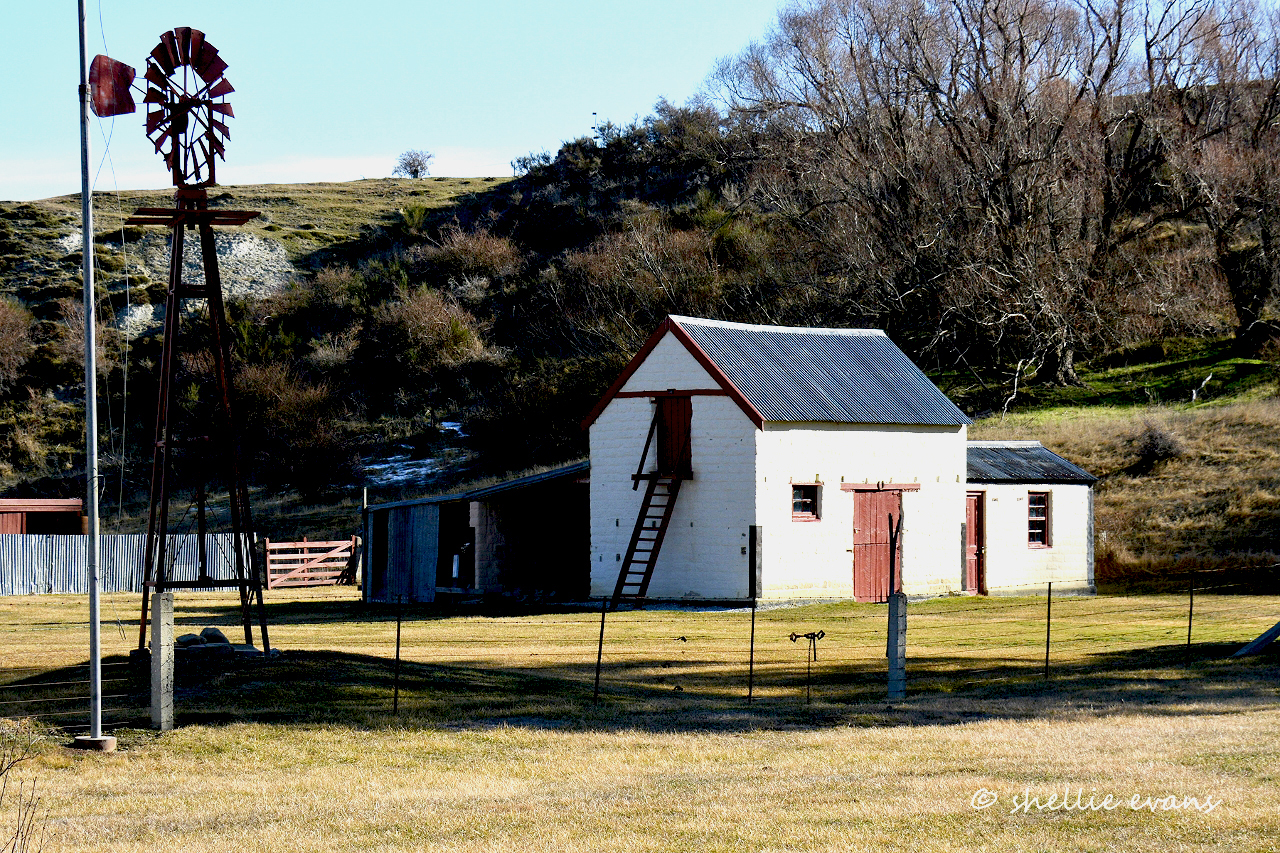
In August 1887 the Hayes acquired the lease of the 94 acre block at Rough Ridge, which, if his children’s letters to the Otago Witness are accurate, was called Echo Farm. It is assumed that at this time they either built or moved into the small mud brick cottage, around which would grow the Hayes Engineering Works. The Hayes had nine children between 1881 and 1900, of which Llewellyn, Bernard, Stanley, Gilbert and Irving were involved in the works. Llewellyn’s son Lesley, and Stanley’s son Clive carried on the family tradition.
The Hayes children were educated by Hannah Hayes and worked on their lessons every day. Lessons included composition, and it is through their early lessons in letter writing that we get a glimpse into the Hayes’ home life. The Hayes children were encouraged to write to the children’s page of the Otago Witness ‘Dot’s Little Folks’. Son Llewellyn wrote in 1891 describing his Christmas presents, showing encouragement from home in things mechanical – receiving a clock-work figure of two sawyers and an engine (as well as practical presents such as a wheelbarrow and a dog whistle) The girls requested names for kittens (Skip and Fluff were suggested, and for their rooster – to be named Andy).
In the early 1890s Ernest Hayes was advertising his services to local flour mills:
‘TO MASTER MILLERS – Wanted SITUATION by a practical Miller; over 20 years’ experience; understands stones, rolls, purifiers, centrifugals; can run either wind, steam, or water mill, and do general repairs, millwright work &c., if required – Apply Ernest Hayes, Ida Valley Flour Mills, Rough Ridge.
The Rural Economy and Engineering Works
Settlement and farming led to the development of associated technologies – fencing (strainers and wire reelers) gate hinges, methods of rabbit control. Following on from international precedents people came up with new solutions to old problems or adapted existing technology to make it work better in local conditions. Laws controlling fencing and the trespass of livestock were passed as early as 1842. In rural areas wire fencing from the 1850s when heavy annealed iron wire became available although it only came in short lengths. From 1855 light gauge wire could be produced relatively cheaply and from this date on fencing wire was widely advertised.
The Encyclopedia of New Zealand provides an excellent description of the history and significance of fencing in the New Zealand economy:
‘Fencing technology was simple. Wire fencing was erected in sections, with the wires tied to strainer posts at each end of the section (called a strain). Intermediate posts are put in at intervals between the strainers to support the wires. Battens, droppers, waratahs or standards hold the wires in place between the intermediate posts. A typical wire fence erected on the sheep stations of the South Island in the 1860s and 1870s consisted of five plain wires with iron standards nine feet (2.7 metres) apart and 10 strainer posts to each mile (1.6 kilometres). Some runholders soon began fencing on a large scale, with a corresponding change to farm management practices that such enclosure allowed. By 1878, 77% of New Zealand’s fenced area was enclosed with wire – 82% of it in the South Island. Farming had expanded much more rapidly in the South Island and there was no cheap alternative to wire fencing, whereas in the north there was a ready supply of timber.’
With the need to adapt existing technologies and invent devices to meet New Zealand conditions, came the need to manage that process. New Zealand’s first system for issuing patents was The Patent Act 1860, modelled on British law, which established the New Zealand Patent office. Applications for patents could be filed at any courthouse from 1882, and from 1889 the Patent Office administered trademarks and designs. Flax spinning and gold mining patents were the most common in the 1870s and 1880s, but from the 1880s inventions for farm tools took over. Local manufacturing industries developed. Hayes used the services of a number of patent agents from around 1904 - Henry Hughes Ltd and Dunedin based H.M. Davey in New Zealand, and a number of patent attorneys in Australia - and was well informed on patent and design issues and intellectual property rights.
Associated with fencing were technologies for maintaining wire tension (wire strainers) and for managing the wire (reels, holders and the like). Gates, hinges, cattle stops, rabbit proof fences. Farmers needed these small but important items. Firms grew which specialised in such items. Dunedin inventor John Reid, son of Donald Reid, was one such figure, patenting the Triplex Wire Strainer, which was sold through Donald Reid’s well known and successful stock and station agency. The largest manufacturer of agricultural implements and equipment of Reid and Gray’s Otago Implement and Machine Works, which started in Oamaru had branches in South Canterbury, Otago and Southland. They established a large engineering workshop in Dunedin.
The Start of the Hayes’ Engineering Works
By 1895 Ernest had built a small mud brick workshop near the cottage, and was advertising his services as a wheelwright. In August 1895 he advertised in the Otago Witness:
‘E. Hayes (late of Messrs Pinfold’s Engineers and Millwrights, England) begs to intimate that he is prepared to execute repairs in millwrighting, Flour, Oatmeal, Spice, or Paint Mills, Threshing-mill machinery Repaired. Wheel-gearing a Speciality – Note address: E.Hayes, Wheelwright, Rough Ridge Post Office. Telephone, Hayes, Blackstone P.O.’
The rabbit plague was obviously an immediate scourge as Ernest Hayes’ first invention to be sold commercially was another weapon to aid in the fight against the hopping menace. Up until the Rabbit Nuisance Act of 1947, rabbit control was the responsibility of the landowner. Inland Otago was particularly hard hit and various methods (shooting, trapping, gassing, poisoning) were tried to reduce numbers. Phosphorised pollard (wheat bran) was introduced from Australia in the mid-1890s and rabbits took it year-round, unlike earlier poisons which would only be taken when there was no grass. Phosphorised pollard was the most widely used measure of rabbit control in Otago and Southland by the end of the 1890s, and pollard baits were a mixture of bran and poison dried to a sheet and cut into squares. Hayes set about trying to improve the production of poison.
Hayes advertised his ‘Lightning Poison Pollard Cutter’ in August 1895. The patented pollard cutter could, he claimed, cut 40,000 squares an hour. According to a newspaper article on the product, the pollard cutter had been developed a couple of years earlier, and had been improved since that time. The tin blades were initially cut out with tin snips, later with a circular punch. The pollard cutting tool was a labour saving device, the first of the simple, well designed and cost-effective tools and equipment for which the Hayes family was to become well known.
The Lightning Pollard Cutter came in three sizes ‘for farmers, grazing runholders, and for large stations.’ The machine was operated by the user ‘taking hold of a handle on each side and running it over the cake of pollard, which it cuts in longitudinal slips, a cross stroke reducing these to the most suitably-sized squares.’ The pollard cutter was said to do the work of a dozen men. Hayes planned to put a poison mixer on the market as well. He then turned attention to fencing and advertised his ‘Automatic Wire Tightener’ which would save ‘three coils of wire to the mile in erecting new fences.’
The operation was run as a family business and was known as E Hayes and Sons, and for a period sometime after 1912, as ‘E Hayes and Sons, Windmill Works, Oturehua.’ The Hayes family were involved in design, production, marketing and administration. Hannah Hayes initially marketed the pollard cutter, travelling from farm to farm throughout the Maniototo area by bicycle. Later sons Gilbert and Irving travelled around both the North and South Islands with samples and catalogues.
By 1897 Ernest Hayes had fitted the workshop out with a homemade pedal powered wood lathe. Along with agricultural equipment, Hayes turned his attention to gold mining technology. He patented a ‘gold dredge crevice bucket.’ The bucket was claimed to “pare off a Maori bottom, whereas the present buckets in use often when let down stop the engine, owing to the large area of bucket surface coming into contact with the bottom.’ It was further claimed that the ‘nose will go down into a crevice and take out the wash and gold in cases in which it is impossible for the broad body of the ordinary bucket to get down.’ The paper looked forward to the demonstration of a dredge fitted with the bucket.
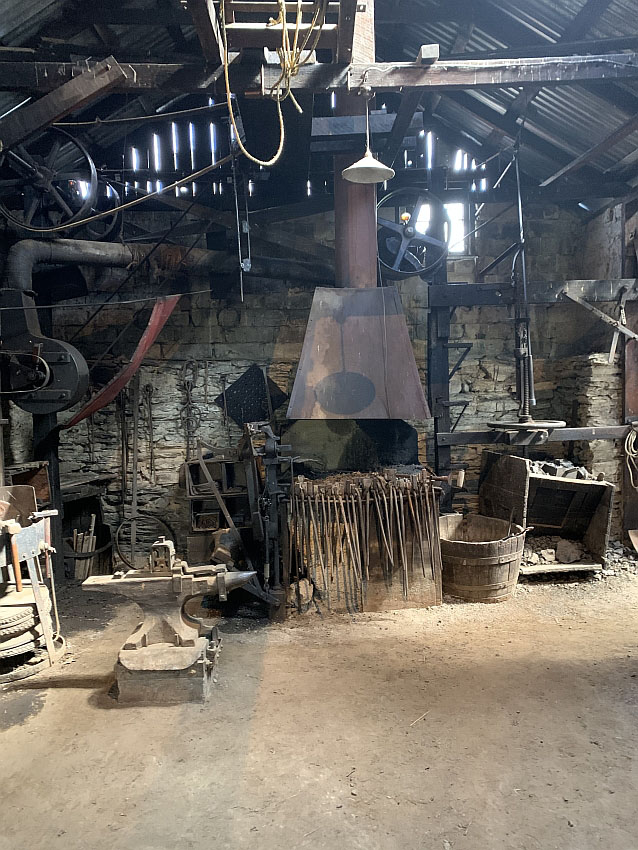
By 1900 Ernest Hayes was ready to turn his attention full time to engineering. Ernest began designing, constructing and marketing farm tools and equipment full time, the company slogan becoming ‘Durability before Cheapness.’ The Works developed around a machine shop driven by windmill and later Pelton wheel, which transferred power to machinery via a central shaft and via belts to different machinery. Though antiquated to modern eyes, this was, as archaeologist Bill Edwards points out, standard machine shop technology in the nineteenth century.
A fire at the works in June 1905 was reported in the Otago Witness. The fire began in ‘one of the workshops’. One of the blast furnaces was destroyed and ‘part of one of the forges, some heavy frame-work, and several belts were partly consumed.’ One heavy cast-iron wheel, weighing a quarter of a ton, was red hot. The correspondent wrote that it was lucky that the fire was able to be controlled as the firm ‘has various kinds of machine work on hand’ which would have been delayed.
Hayes developed the Works around the available power and technology. At the beginning hand powered tools were used – a pedal lathe and cutting tools. From 1910-1927 mechanical power was provided by a windmill which drove line shafts off which belts drove various machines, supplemented with small stationary engines. A generator system run off a Pelton wheel was installed in 1934. For cut and formed steel components, patterns and jigs were created for the product components to allow mass production and machines were designed to make each component. The patterns enabled smooth and repeatable manufacture. Cast components were made off site – out sourced largely to Dunedin and Invercargill.
By 1905 Ernest was well established working on various innovative tool and equipment designs, and improvements to existing designs such as wire straining devices, and windmills (from 1910 onwards – when a windmill was erected to power the Works). He applied for and was granted patents, initially under his own name, and later under the name of Ernest Hayes and Sons, though patents were also t
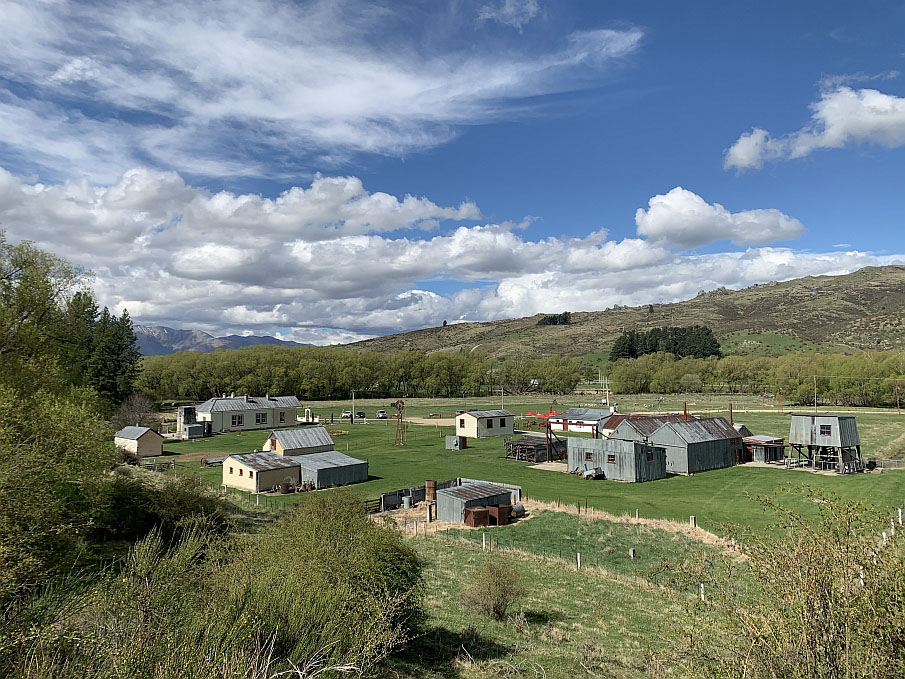
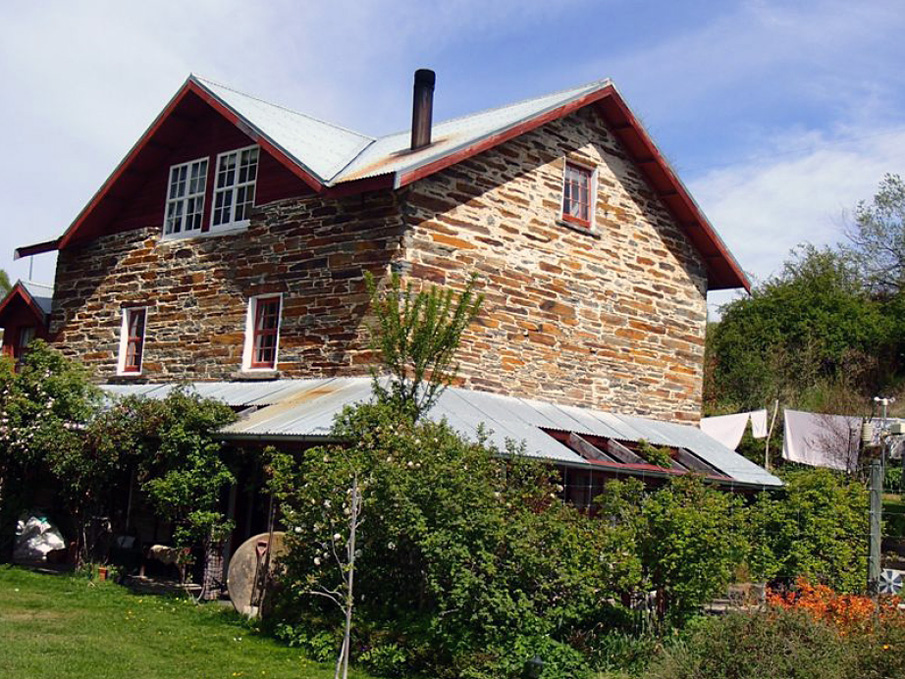
Increased production meant there was a need for more space. Sometime prior to 1902 a larger stacked schist stone workshop with a forge had been erected. This was extended over the next twelve years, with a series of gabled and lean-to additions. The final extent of the Works buildings was reached in 1930 with the erection of the mud brick office.
Living arrangements
Initially the Ernest Hayes built a small mud brick cottage on their land just to the south of Rough Ridge. The family lived in that building and in other buildings as they were built. Stanley Hayes built his own cottage south of the Works in 1912 (known as the ‘Terrace Villa’). Llewellyn and Irving may have lived in the stable loft until the men’s quarters were added to the stables.
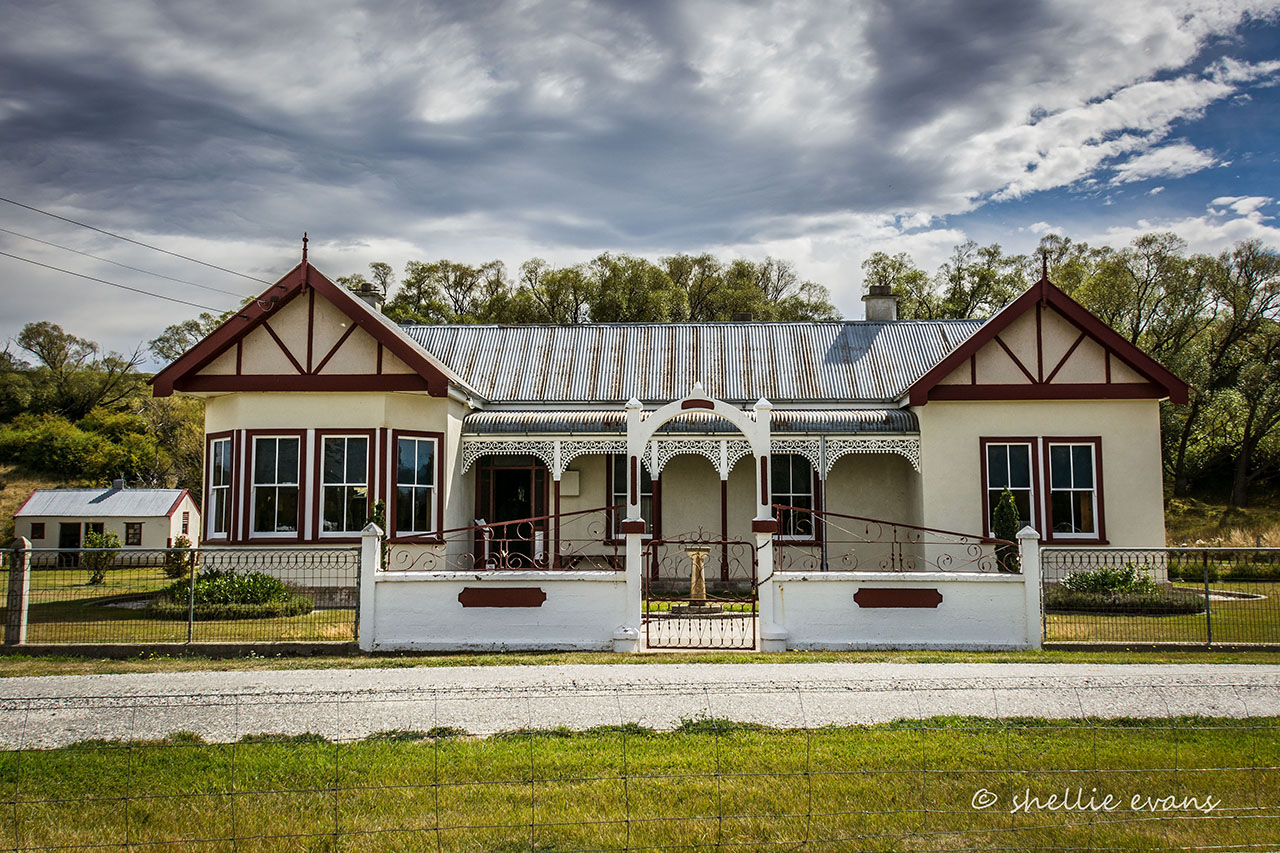
With such a large family, a bigger residence was needed. What was known by the family as the ‘Big House’ (now known as Hayes’ House) was built between 1919 and 1922. After Llewellyn bought the adjoining property on which the former Ida Valley Flour Mill was located in 1920, family members lived in the old miller’s house. Ernest and Hannah Hayes or their immediate family lived in the ‘Big House’ until 1952. Ernest Hayes died in 1933 and Hannah in 1946.
A Family Operation
Ernest and wife Hannah, sons Llewellyn, Bernard, Stanley, Gilbert, Irving, Leslie, Stanley’s sons Clive and Russell, daughter Olive and husband Doug Smith and their daughter Muriel Smith, and Les’ and Bernard’s wives Shirley and Amy - This was a family concern. Hannah was famous for cycling all over the countryside promoting products (even as far as Lindis Pass!). Llewellyn Hayes worked as an engineer and had his own patent for improvements to the Lightning Pollard Cutter at age fourteen. With his brother Bernard he made the first ‘Monkey Brand’ wire strainer which was later patented. Bernard worked as a commercial traveller for the company, spending months on a motorcycle, selling wire strainers to places as distant as Manapouri, Harihari and Waipukurau. Fourteen year old Stanley started at the works when he could leave school and became a blacksmith and general engineer, as well as building the Terrace Villa and the Big House. Gilbert worked in the factory and later followed Bernard into the sales side of the business. Irving worked as a labourer at the works before helping erect windmills, later demonstrating Hayes products at farms and shows. Irving managed the Invercargill branch of E Hayes and Sons when it opened in 1933.
The next generation followed their fathers into the works – Llewellyn’s son Leslie helped erect the first Wonder Windmill in 1943 before becoming office manager. Clive Hayes (Stanley’s son) began swinging a hammer as a teenager before becoming work’s foreman and with his sister’s husband Doug Smith set up a company to run the works after Leslie and Llewellyn shifted to Templeton, keeping his involvement until the mid-1950s.
The Products
From designs drawn up on the kitchen table to complex engineering creations, Ernest Hayes and his family firm made products that became nationally recognised. Historian Claudia Orange writes that Ernest was: ‘[a] pioneer in the manufacture of labour-saving appliances and machinery for farm and station, Ernest Hayes had used his capacity for solving technical problems to invent articles which were ingenious in design, simple but strong, and easy to use. From a remote workshop farm he achieved a national reputation for his products.’ Starting with the Lightning Pollard Cutter, he and his sons turned their attention to pollard mixers, wire strainers, fence wire reels, fence standards, fence standard repair kits, seed drills, various types and sizes of windmills, windmill water pumps, cattle stops, docking irons, stays and posts. Some items were innovative and unique; others were improvements on other peoples’ designs or copies of designs for which the patents had lapsed. Hayes’ designs were more strictly wind driven rotary pumps for pumping water for irrigation purposes, rather than mills for grinding.
While the first recorded windmill for commercial production was built in 1912, Ernest Hayes had been tinkering with windmills since the mid-1890s. He designed a windmill to power the works which was erected in 1910. The Hayes ‘Power Mill’ was patented in 1909. The Windmills produced at the Works included the ‘New Idea’, ‘Revolving Tower’, and ‘Wonder Mill’. They ranged in size from the small fan with a three foot diameter, to the massive 20 foot diameter fan for the Revolving Tower. The Hayes would also erect the windmill for the purchaser. Some four hundred windmills were sold between the 1920s and the 1950s.
In addition to making their own products the Hayes also imported and on-sold a range of other products including hand tools and equipment, small engines, vices, hoists, blacksmith’s tools and the like. They also supplied large volumes of kerosene and benzene (or petrol) – not likely to waste anything, many of the tins and storage boxes found their way into the Works, recycled as storage units.
Later History of the Works
Many of the Hayes family were involved in the Works. Llewellyn Hayes was the engineer and manager of the works until his retirement in 1964. Bernard worked at the Works and then as the company’s office manager from after his active service in World War One through till 1947. Stanley worked in the Works from 1904 till 1921 when he left to manage his own farm. Gilbert worked and later was a commercial traveller for the company until 1932 when he left to farm in Tapuhi in Northland. Irving was a worker from 1914 then a windmill erector and later a traveller for the Works from 1919 until 1933. In 1933 he opened Hayes Hardware shop in Invercargill. He retained links to the Works until 1947 when the hardware became a separate business owned and managed by Irving. Leslie (Llewellyn’s son) was office manager until 1964 when he took over as managing director of E. Hayes and Sons. Clive Hayes started work in January 1935 and continued till 1952 when the Works business was relocated to Templeton.
Extended family members were also drawn into the works: Doug Smith (later married to Olive Hayes), Shirley Ball (later married to Leslie Hayes). Doug Smith had worked for the Hayes from 1923-1941, initially as a commercial traveller and then as an engineer.
In 1952 the works were shifted to Templeton by Hannah and Ernest’s son and grandson, Llewellyn and Leslie Hayes.
Clive and Ngaira Hayes went into partnership with Doug Smith under the name of Hayes and Smith Limited. They carried on operating the works as a general engineering workshop servicing the local community, and lived in the house after 1952. The company articles indicated a range of business activities, but the core business was that as ‘engineers and manufacturers of farm and agricultural equipment of all types as carried on by the ‘firm’ of E Hayes and Sons at Oturehua.’ The shareholders were local farmers. By 1958 the Company was in liquidation and the property was transferred to Doug Smith.
Doug Smith continued to operate the business on his own account until around 1975, when he retired to Ranfurly. Roger Cameron used the works as a general engineering workshop and later acted as custodian for NZHPT.
New Zealand Historic Places Trust Ownership
In 1980 the NZHPT and the Crown negotiated the subdivision and purchase of the Works complex and site from Doug Smith. In 1983 the house was also subdivided off the original block and it was purchased by NZHPT.
In 2011 Hayes Engineering Works, including Hayes House, is a heritage property open to the public and attracts many visitors from the Central Otago Rail Trail which passes close by. The Hayes Engineering Works are open throughout the year, with operating days, where the works can be seen running, in the summer. As with the engineering workshops the homestead remains very much as it did when first moved into by the Hayes family in October 1920, making the visitor experience like a step back in time. As well as being ahead of its time in terms of interior fittings, the homestead had unique features that can be viewed and appreciated today.
Hayes products (wire strainers, wire dispensers, fence post tools, gates and the like) are still being made, and are distributed by Tru Test Group, acknowledging their debt to pioneering engineer Ernest Hayes.